
Maintaining the pristine facade of a commercial property is essential for brand reputation, but this must never come at the expense of human safety. In the UK, window cleaning safety is governed by a rigorous legislative framework designed to minimize the risks associated with working at height. For facilities managers and building owners, navigating these regulations is not merely a matter of best practice; it is a strict legal obligation. Failure to comply can result in severe prosecution, reputational ruin, and, most crucially, catastrophic injury.
The Legal Framework: Work at Height Regulations
The primary legislation governing this sector is the Work at Height Regulations 2005. Under these rules, duty holders must ensure that all work at height is properly planned, supervised, and carried out by competent persons. The regulations establish a clear hierarchy of control measures. The first priority is always to avoid working at height if the task can be safely performed from the ground. When working at height is unavoidable, equipment that prevents falls (such as collective guardrails or personal fall protection systems) must be prioritized over equipment that merely minimizes the distance and consequences of a fall.
Choosing the Right Access Method for Safety
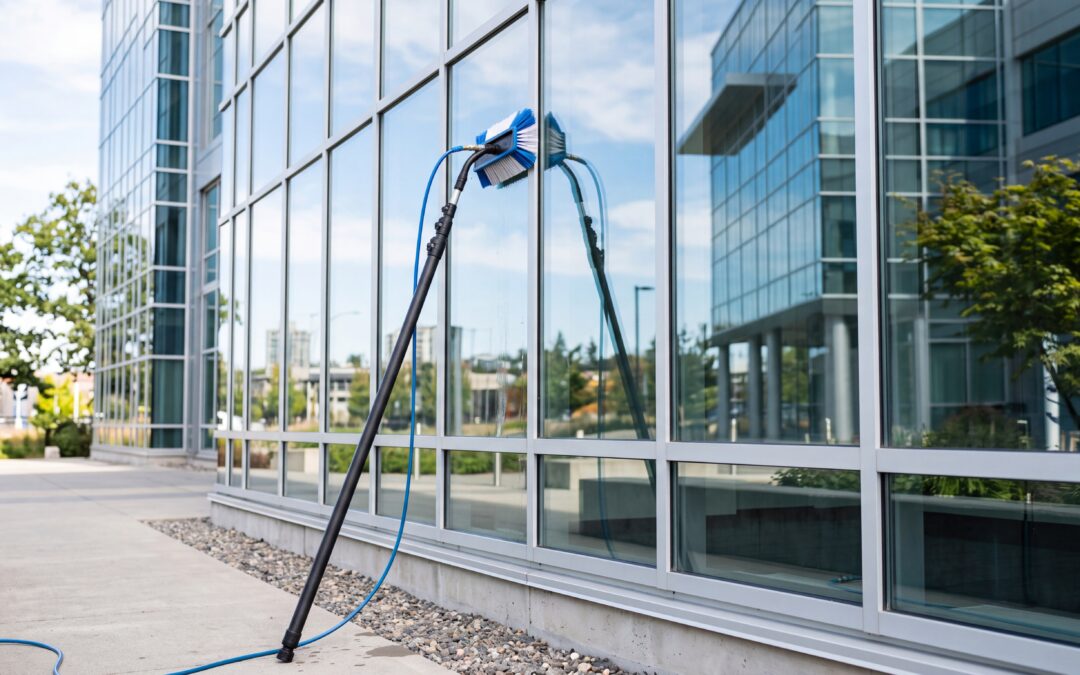
Modern commercial window cleaning utilizes various access methods, each suited to specific building designs and risk profiles. For lower-level windows, water-fed pole systems allow operatives to work safely from ground level, eliminating the need to ascend. However, when architectural features demand physical elevation, alternative methods must be deployed with strict adherence to safety protocols.
For buildings where workers must step onto external ledges or operate near unprotected edges, dedicated fall protection systems are vital. To comply with regulations, secure anchorage points such as safety eye-bolts (conforming to BS EN 795 and tested to BS 7883 standards) must be professionally installed and certified. These systems allow operatives to attach safety harnesses and lanyards securely before commencing work.
In cases where traditional ladder window cleaning is necessary, ladders should only be used for low-risk, short-duration tasks where safer access methods are not viable. Operatives must be thoroughly trained in ladder stability and correct placement to prevent slips and falls.
High-Rise Safety and Dynamic Risk Assessments
Managing the safety of towering architectural structures requires specialized expertise. The execution of high-rise window cleaning involves complex rope access (abseiling) and cradles, demanding meticulous planning and daily equipment inspections. Dynamic site conditions—such as wind speeds, microclimates, and sudden temperature drops—can dramatically alter the safety profile of a task.
This is particularly true during colder periods, where a thorough approach to risk-led winter window and facade cleaning is critical to mitigate the dangers of freezing water, slippery surfaces, and high winds. Operatives must continually evaluate weather forecasts and on-site conditions before deploying any high-level access equipment.
Compliance and Partner Vetting
Facilities managers bear the ultimate responsibility for ensuring that any third-party contractors they employ adhere strictly to UK safety legislation. When conducting a procurement process, it is vital to follow a robust facilities guide for vetting partners. This involves verifying that the contractor holds adequate insurance, provides comprehensive Risk Assessments and Method Statements (RAMS), and invests in ongoing training for their personnel. By prioritizing safety compliance, businesses protect lives while securing a strong return on investment. Partnering with a certified specialist allows building owners to maintain strict safety compliance and return on visibility, keeping their assets pristine while shielding themselves from legal liability.
Recent Comments