
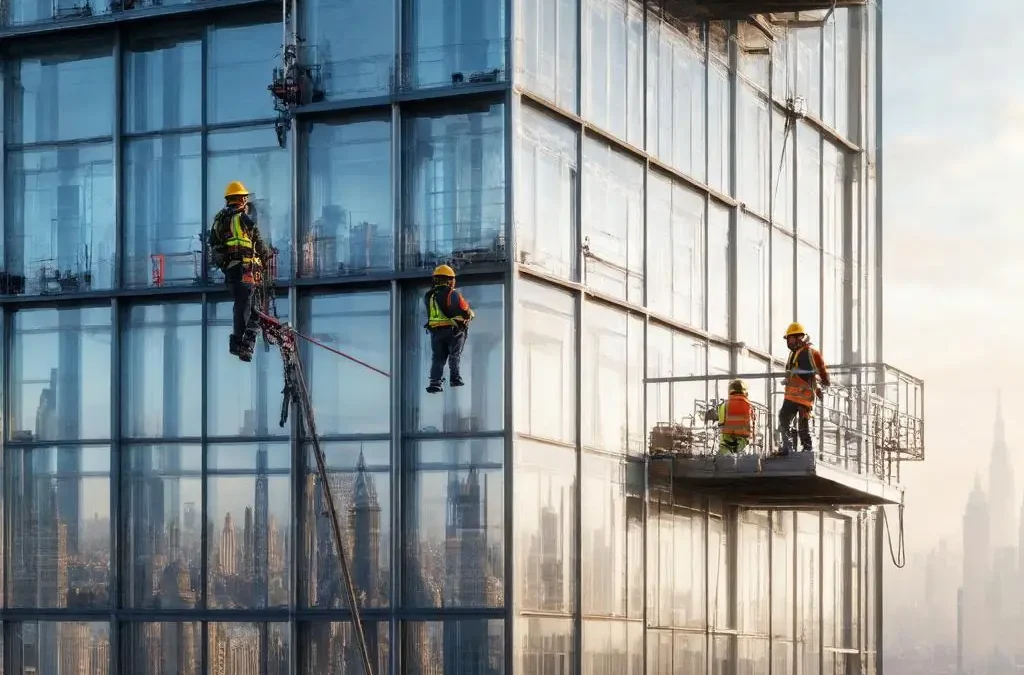
Aluminium-framed glazing remains a mainstay of modern commercial facades because it delivers robust strength in slim profiles, resists corrosion, and demands comparatively low routine upkeep. For facilities managers, the specific configuration of the frame and glass—thermal breaks, insulated frames, powder-coated or anodised finishes, and insulated/Low‑E glass—directly influences day‑to‑day cleaning methods and long‑term performance.
- Thermal breaks and insulated frames: Most commercial aluminium systems incorporate a non‑metallic thermal break between inner and outer profiles to reduce heat transfer. These areas are vulnerable to damage from aggressive cleaning or high‑pressure water. Gentle techniques preserve the barrier and avoid water ingress where frames interface with glazing gaskets.
- Powder-coated finishes: Polyester powder coating (PPC) is durable but can chalk over time if neglected or exposed to aggressive detergents. Non‑abrasive cleaning and pH‑neutral solutions help maintain gloss and colour stability.
- Anodised finishes: Anodising creates a hard, integral oxide layer. It is resilient, but acids, alkalis and abrasive pads can dull or pit the surface. Use only mild cleaners and soft applicators.
- Insulated glass units (IGUs) and Low‑E coatings: Most Low‑E coatings sit on an inner surface of the sealed unit, but some products carry external easy‑clean or solar control layers. These can be sensitive to abrasives, harsh chemicals, metal blades and certain solvents. Always follow manufacturer guidance and default to pure water or pH‑neutral methods.
In short, your chosen cleaning regime should respect the engineered layers that deliver thermal efficiency, airtightness and finish longevity. What protects energy performance typically protects appearance too.
Safe, Non‑Abrasive Cleaning Methods – and What to Avoid
The safest, most consistent approach for day‑to‑day façade cleaning is either pure water (deionised) fed through soft‑bristle brushes or a mild, pH‑neutral detergent applied with non‑scratch tools. Both methods, when correctly executed, lift dirt films, traffic grime and mineral residue without compromising coatings, seals or thermal breaks.
Recommended practices:
- Use pure water systems for glass and frames wherever feasible. Rinsing with purified water dries spot‑free, reducing the need for squeegees and chemical residues around seals and gaskets.
- Where detergents are needed (heavy grime, oily deposits), use pH‑neutral solutions at low concentration and rinse thoroughly.
- Apply with soft microfibre cloths or soft‑bristle brushes. Wipe in consistent strokes and avoid excessive pressure at gasket edges.
- Protect gaskets and thermal break interfaces. Avoid scrubbing across gasket lips; work away from seals to reduce the risk of lifting edges or forcing dirt particles beneath them.
- Keep drainage/weep holes clear. After cleaning, visually confirm that sills, transoms and bottom rails are free of debris so water can egress as designed. Blocked weeps encourage standing water, staining and potential ingress into insulated cavities.
- Control water flow. Use low to moderate flow rates to prevent flooding of interfaces, especially on older frames or retrofitted units.
What to avoid:
- Abrasives: No scouring pads, steel wool, razor blades or abrasive powders on glass, powder coat or anodised aluminium.
- Harsh chemicals: Avoid strong alkalis or acids, solvent‑heavy glass cleaners, ammonia on coated glass, and chlorine‑based products. These can haze glass, strip protective layers and accelerate powder‑coat chalking.
- High‑pressure jets at close range: Pressure washing near seals, joints and thermal break zones can force water past gaskets and compromise airtightness. If pressure is unavoidable for adjacent substrates, reduce pressure, widen the fan and keep a safe distance from fenestration lines.
- Hot cleaning on hot glass: On warm days, allow surfaces to cool; rapid drying can leave spotting and increase the risk of streaking or thermal shock on certain coated glass.
- Contaminated tools: Grit lodged in brushes or cloths causes micro‑scratching over time. Rinse tools frequently and replace when worn.
Access Planning for Every Elevation: Methods, Risk Assessment and Weather
Matching the access method to the building’s height, geometry and site constraints is central to safe, efficient cleaning. A robust plan considers public interface, anchorage availability, façade complexity and programme pressures.
Common access solutions:
- Water‑fed pole systems: Ideal up to several storeys from ground level, delivering excellent results on glass and frames with minimal disruption. Particularly effective across large areas and where chemical minimisation is a priority.
- Rope access (abseiling): Suited to high‑rise and architecturally complex elevations where direct ground access is limited. Requires certified technicians, anchor verification and strict exclusion zones at ground level.
- Building maintenance units and cradles: The preferred option for very tall or expansive façades with integrated systems. Allow controlled, repeatable access, often enabling close‑inspection tasks alongside cleaning.
- Mobile elevating work platforms (MEWPs): Effective for mid‑rise areas, atria and set‑backs. Require competent operators, ground bearing checks and careful traffic/pedestrian management.
- Ladders: Restricted to short‑duration, low‑risk tasks and only where safer alternatives are not reasonably practicable. Use within a documented risk assessment and with appropriate controls.
Risk assessments and method statements (RAMS):
- Identify fall risks, fragile surfaces, overhead obstructions, live services and public interfaces. Establish clear exclusion and signage zones.
- Verify anchor points for rope access and ensure rescue plans are in place.
- Confirm façade material sensitivities and prohibited substances before works commence.
- Coordinate with site security, reception and tenancy managers to manage access, lifts and out‑of‑hours activities.
- Ensure operatives are trained and medically fit for the chosen method; keep certification records current.
Scheduling around weather:
- Wind: Set thresholds for rope access, cradles and MEWPs; elevated wind increases swing/boom risk and reduces control.
- Rain and freezing conditions: Avoid cleaning in driving rain or sub‑zero temperatures that can cause icing, slip hazards and thermal stress.
- Solar gain: Schedule sun‑exposed elevations earlier or later in the day to reduce rapid drying, spotting and operative fatigue.
- Urban constraints: Consider footfall peaks, deliveries and local events to minimise disruption and manage public safety.
Early Warning Signs of Glazing or Seal Failure – When to Escalate
Proactive inspection during cleaning visits is a cost‑effective way to spot emerging issues. Early intervention protects energy performance, prevents water damage and avoids reputational impact from visibly degraded façades.
Look out for:
- Fogging or condensation between panes: Strong indicator of IGU seal failure. Escalate for survey; affected units typically require replacement.
- Persistent internal drafts near frames: May signal failed perimeter sealant, displaced gaskets or compromised thermal breaks.
- Sticking or misaligned sashes/openers: Hinge wear, warped frames or debris build‑up can strain hardware and seals.
- Degraded seals and caulking: Cracking, shrinking, detachment or brittleness around frame perimeters and mullion/transom joints; water staining below joints is a tell‑tale.
- Chalking, fading or roughness on powder‑coated aluminium: White residue on a fingertip rub indicates chalking. Early remedial cleaning and protective treatments can slow progression; severe cases may need recoating.
- Pitting or discolouration on anodised finishes: Often exacerbated by incompatible cleaners or pollution deposits; escalate for specialist assessment before damage becomes irreversible.
- Blocked drainage/weep holes: Standing water, green growth or tide marks at sills and transoms suggest poor drainage—clear and monitor.
- Cracked or hardened gaskets: UV exposure and age can embrittle elastomers; failures compromise airtightness and water resistance.
- Water ingress signs: Damp patches, efflorescence or mould internally near glazing lines may indicate failed seals or defective interfaces.
- Damage from unauthorised works: Adhesives, cement splashes, paint overspray or signage fixings can harm coatings and gaskets; address promptly to avoid permanent staining.
Escalation guidance:
- Safety or water ingress issues: Prioritise immediate temporary mitigation (e.g., sealing, protection) and arrange rapid survey.
- Aesthetic coating degradation without functional impact: Plan remedial cleaning/coating maintenance within the next cycle.
- IGU failures: Prepare for unit replacement; consider grouping replacements to optimise access costs.
A Pragmatic Maintenance Plan for Urban Sites
A structured plan preserves energy efficiency, extends asset life and protects corporate image, especially in pollution‑heavy urban environments.
Recommended frequencies (guide only; adjust for exposure and use):
- Ground and podium levels (high footfall, traffic film, retail frontages): Clean every 4–8 weeks to maintain presentation and prevent grime from etching glass or accelerating coating chalking.
- Mid‑rise elevations: Quarterly to biannual cleaning, depending on orientation, nearby roads/rail and prevailing winds.
- High‑rise façades: Biannual cleaning is typical; exposed coastal or industrial locations may require quarterly schedules.
- Frames, sills and pressure caps: Include frame washes at least every second glass clean to remove deposits that encourage chalking and gasket deterioration.
- Drainage/weep checks: Inspect and clear during each visit, particularly after leaf fall or storms.
Defect logging and compliance:
- Maintain a central register capturing date, elevation, access method, defects found, photos and actions taken. Link to asset tags or grid references on elevations.
- Categorise defects (safety, water ingress, aesthetic, routine) to prioritise works efficiently.
- Record environmental conditions during cleaning (temperature, wind, precipitation) to contextualise outcomes and optimise future scheduling.
- Keep manufacturer data sheets and warranties on file; align cleaning methods with warranty requirements to protect coverage.
Environmental considerations:
- Prefer pure water systems to minimise detergent use and run‑off. Where detergents are necessary, select biodegradable, pH‑neutral products.
- Prevent contaminated run‑off from entering drains where required; use containment and wet‑vac recovery on sensitive sites.
- Plan low‑noise, low‑disruption methods for occupied offices and retail hours; coordinate with stakeholders for out‑of‑hours works where appropriate.
- Extend façade care to adjacent materials (stone, cladding, signage) to prevent cross‑contamination and streaking.
Partnering for safe, efficient delivery:
- For buildings across London and the South East, engaging a specialist contractor with proven high‑rise capabilities and certified management systems reduces risk and total cost of ownership. Efficient Cleaning Services brings two decades of experience in commercial window and façade cleaning, operating year‑round with water‑fed poles, rope access, cradles and mobile platforms to service buildings of any height.
- Safety and quality are underpinned by ISO 9001, 14001 and 45001 certifications, Safe Contractor approval, and affiliation with BICSc and the Federation of Window Cleaners (FWC). Rigorous recruitment, training and communication ensure high standards while safeguarding the public and your people.
- Whether you manage retail units or office blocks, our team provides a compliant, tailored programme—covering windows and external building/facade cleaning—that aligns with your site’s specific risks and corporate image goals.
If you would like an assessment or a free, no‑obligation quote, please get in touch via our website. We will review access options, confirm the safest, most cost‑effective method for your elevations, and establish a maintenance schedule that protects both performance and presentation.
Recent Comments