
Across households, a simple mix of vinegar and water has become a popular recipe for streak‑free glass. It is inexpensive, reduces plastic waste when used in refillable bottles, and avoids harsher chemicals that can emit irritants. In a domestic setting—small panes, straightforward access, uncoated glass—this approach can work well when paired with a clean microfibre cloth.
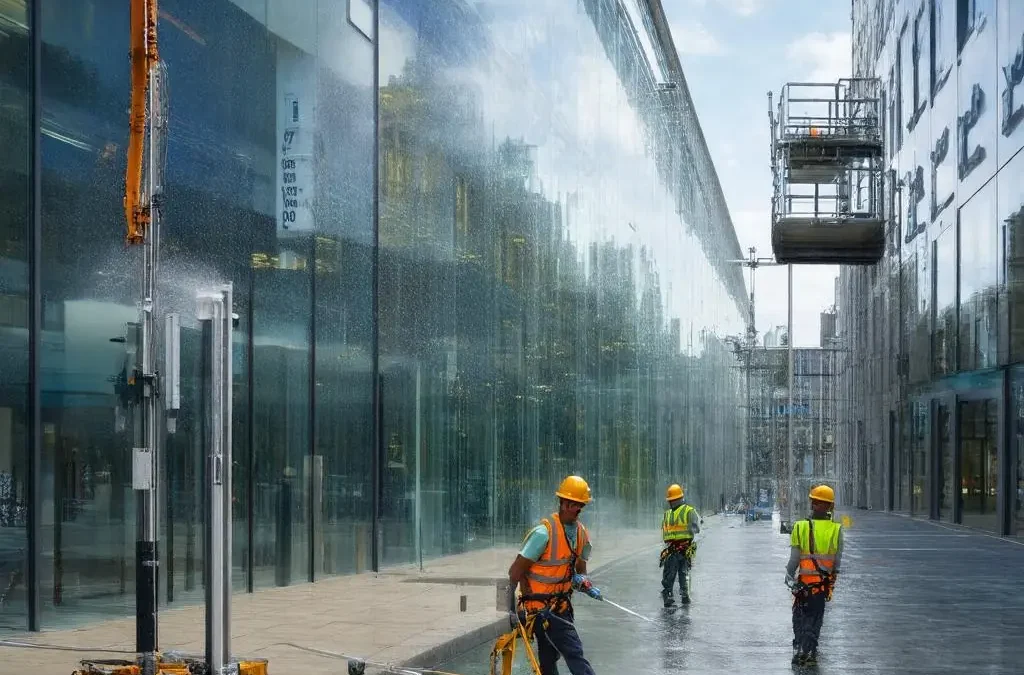
Commercial properties face a different set of demands. Offices, retail units and high‑rise facades must contend with scale, safety, diverse materials and regulatory compliance. The volumes of glass are larger, access is more complex, and the risk profile is higher. Odour control, indoor air quality (IAQ) and occupant comfort also matter in busy workplaces.
Most importantly, acidic mixes are not universally compatible. Many commercial buildings incorporate solar‑control or low‑E coatings, anodised aluminium, natural stone (such as limestone or marble), and a variety of sealants. Acidic solutions can etch stone, stain anodised finishes and degrade certain sealants, and even leave marks on delicate coatings. In short: what is safe for a domestic window may be unsuitable for a corporate facade.
This is where professional methods—designed to deliver both eco‑safety and consistent, streak‑free results—come to the fore.
Chemical‑Free Clarity at Scale: Purified Water and Interior Techniques
For exterior glass up to several storeys, purified water systems—using deionisation and/or reverse osmosis (RO)—are the gold standard. By stripping dissolved minerals to achieve near‑zero total dissolved solids (TDS), purified water can lift soils from the glass and dry to a spot‑free finish without detergents. Delivered through water‑fed poles (WFPs) with soft‑bristled brushes, this method offers distinct advantages:
- Safety: Technicians remain on the ground, significantly reducing work‑at‑height risk.
- Sustainability: No routine chemical discharge and minimal run‑off; reusable tanks and refillable containers support waste reduction.
- Quality: When properly applied and rinsed, purified water leaves no mineral residues to cause spotting.
- Efficiency: Large expanses of glazing can be cleaned quickly with less disruption to building users.
For interior glass, best practice prioritises IAQ and surface protection:
- Use high‑quality microfibre cloths and well‑maintained squeegees for controlled, low‑moisture cleaning.
- Where additional cleaning power is required, choose low‑toxicity, low‑VOC products and apply via dosing systems to avoid overuse.
- Utilise purified water in trigger sprays for fingerprint and light soil removal, reducing the need for detergents.
- Detail edges and frames with dedicated cloths to prevent smearing and protect finishes.
These techniques minimise volatile organic compounds, reduce odours and help maintain a healthy indoor environment—critical in offices and retail spaces with continuous occupancy.
Reaching Higher, Protecting Materials: Access Methods and Compatibility
Beyond the reach of WFPs or on complex architecture, safe access planning determines the method:
- Rope access (abseil): Ideal for intricate facades and limited ground space. Requires a robust rescue plan, certified anchor points and competent, specifically trained operatives. Weather windows and wind loading must be managed carefully.
- Building maintenance units (cradles): Efficient for wide elevations and repetitive drops. Cradle systems demand routine inspection, rescue procedures and clear communication between operatives and on‑site teams.
- Mobile elevated working platforms (MEWPs): Booms and scissor lifts are excellent for targeted elevations. They need suitable ground bearing, exclusion zones, traffic management and trained operators. Site surveys confirm access routes and turning radii.
- Ladders: Generally restricted to short‑duration, low‑risk tasks under the Work at Height Regulations. Professional operators use ladders sparingly and with appropriate control measures.
Detergents still have a role when used intelligently. Heavy traffic film, post‑construction residues or greasy deposits may require carefully selected, low‑toxicity agents. The guiding principles are:
- Choose neutral or near‑neutral products compatible with the substrate; avoid strong acids or alkalis unless specified by the glass or facade manufacturer.
- Refer to O&M manuals for coated or solar‑control glass, and conduct small test areas before full application.
- Protect surrounding materials: acidic or aggressive cleaners can etch natural stone, discolour anodised aluminium and soften certain sealants or gaskets.
- Control wastewater: use minimal solution, capture run‑off where necessary and keep it out of surface drains in line with local regulations.
Material protection is as important as the glass finish. A professional team will document how each surface—glazing, frames, spandrels, cladding, natural stone and adjacent landscaping—will be safeguarded during cleaning.
Planning for Results: Weather, Water, Frequency and Sustainability
Streak‑free, eco‑safe outcomes depend as much on planning as on technique.
- Weather timing: Direct sun can accelerate evaporation and increase streaking risk; early morning or shaded periods are preferable. High winds affect rope access and MEWP stability, and freezing conditions can create slip hazards and prevent effective cleaning. Professional teams maintain weather protocols and rescheduling criteria.
- Hard water challenges: In areas with high mineral content, unpurified water leaves deposits. On‑board RO/DI systems, TDS monitoring and final pure‑water rinses are essential for consistent results.
- Maintenance frequencies: Corporate image and local environment drive schedules. Typical starting points:
- Retail frontages: weekly to fortnightly for entrances and display glass; monthly for upper glazing.
- Office exteriors: monthly to quarterly, adjusted for pollution levels and elevation.
- High‑rise facades: quarterly to biannual, with targeted interim cleans on high‑touch areas (revolving doors, canopies).
- Interiors: quarterly to biannual, with more frequent cleans for lobbies, lifts and partition glazing.
Service level agreements should define frequencies, quality benchmarks and response times, with seasonal reviews.
- Sustainability in practice:
- Refillable containers and super‑concentrates reduce plastic and transport emissions.
- Dosing systems prevent chemical overuse; microfibre laundering programmes extend cloth life and performance.
- Controlled wastewater plans protect drains and waterways; pure‑water WFP methods inherently minimise run‑off.
- Fleet and route planning reduce travel emissions, and digital quality control reduces paper waste.
A modern contractor integrates these elements within certified management systems, aligning environmental performance with safety and quality.
Your Procurement Checklist: Vetting for Safety, Quality and Eco‑Performance
Facilities managers can de‑risk window and facade cleaning while improving sustainability by using a structured checklist:
-
Site survey and scope
- A no‑obligation survey to assess access constraints, materials, anchorage certification, ground conditions and traffic interfaces.
- A clear scope of works covering elevations, interior glass, frames, canopies and any cladding or facade elements.
-
Evidence‑based RAMS
- Site‑specific risk assessments and method statements addressing chosen access methods (WFP, rope access, cradles, MEWPs, ladders).
- Rescue plans for work at height, isolation of public areas and coordination with building management.
-
Competence and training
- Verifiable training records for work at height and chosen access systems, plus supervision arrangements.
- Demonstrable understanding of material compatibility, IAQ considerations and COSHH controls for any chemicals used.
-
Insurance and compliance
- Adequate employers’ and public liability insurance, with cover for high‑level operations where applicable.
- Adherence to the Work at Height Regulations and other relevant UK legislation and guidance.
-
Quality control
-
Environmental and health & safety management
- ISO 14001 for environmental management and ISO 45001 for occupational health and safety, with procedures for low‑VOC product selection, dosing and wastewater control.
- Independent accreditations such as SafeContractor and professional affiliations (e.g., BICSc and the Federation of Window Cleaners) supporting competence and ethical practice.
-
Materials care and IAQ
- Methods that protect coatings, sealants, anodised aluminium and natural stone; consultation of O&M manuals and test patches as standard.
- Commitment to IAQ: low‑VOC products, purified water for interiors where practical, and out‑of‑hours scheduling to minimise disruption.
-
Sustainability and transparency
- Reusable containers, concentrated products and route optimisation policies.
- A clear, itemised quote with access costs, frequencies, inclusions, exclusions and KPIs, plus optional trial cleans for proof of finish.
As a London‑based specialist with over two decades of experience serving the capital and the South East, Efficient Cleaning Services delivers chemical‑free, spot‑free results via purified water systems where suitable, and deploys rope access, cradles, mobile platforms and, where appropriate, ladders for more complex or taller structures. Our teams operate year‑round under rigorous safety protocols, backed by ISO 9001, 14001 and 45001 certifications, SafeContractor approval and professional membership of BICSc and the FWC.
If you manage offices, retail units or high‑rise facades and want streak‑free glass without compromising IAQ, safety or sustainability, request a site survey and an itemised quote. A tailored plan—right method, right frequency, right controls—will protect your building envelope, enhance your corporate image and keep occupants safe and comfortable.
Recent Comments