
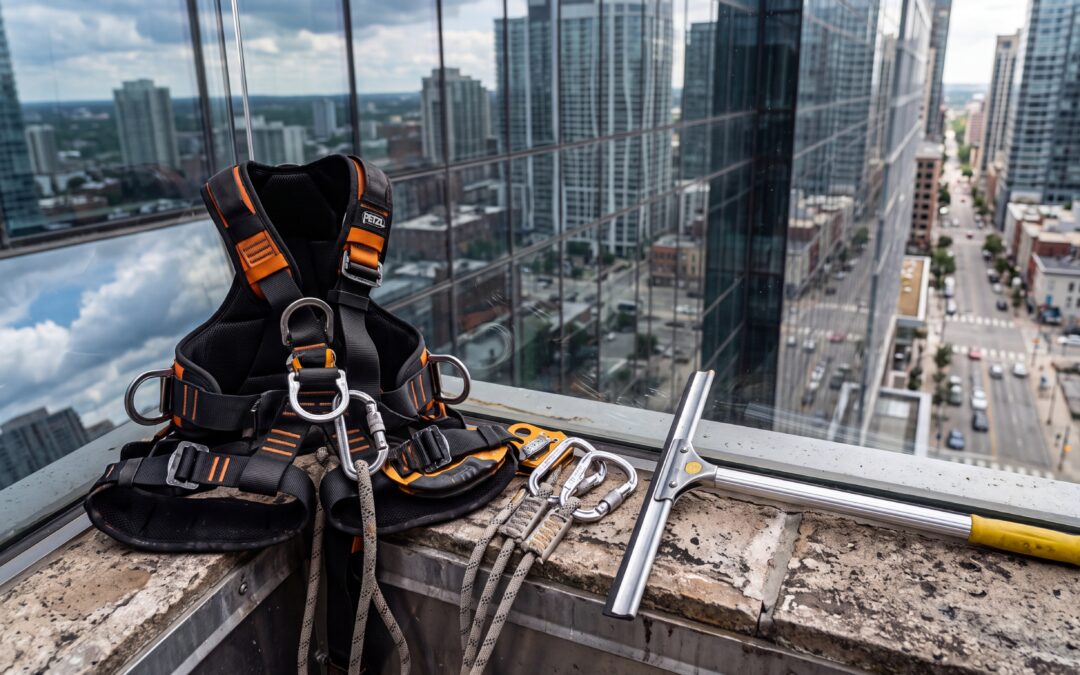
Maintaining the aesthetic appeal of a commercial property is a priority for facilities managers, but it must never come at the cost of human life. In the UK, high-rise and commercial window cleaning is governed by a stringent legal framework designed to minimize risks. Understanding and implementing proper window cleaning safety standards is not merely a matter of best practice; it is a statutory obligation that protects workers, members of the public, and building owners from severe legal and financial repercussions. For premises across the capital, adhering to these strict requirements ensures safe, certified window cleaning for London and the South East.
The Core Legislative Framework: Work at Height Regulations 2005
The primary legislation governing this sector is the Work at Height Regulations 2005. These regulations place a strict duty of care on employers, facilities managers, and building owners to ensure that all work at height is properly planned, supervised, and executed by competent persons. The law establishes a clear hierarchy of control: avoid working at height where possible, prevent falls using existing safe places of work, and minimize the distance and consequences of any potential fall.
For operations where working at height is unavoidable, building systems must be rigorously tested. Under British Standards such as BS 7883 and BS EN 795, safety eyebolts and anchorage points must undergo mandatory annual testing. Property owners must ensure these anchorage points are certified before operatives attach themselves via lanyards and safety harnesses. To ensure full compliance and protect your personnel, utilizing professional fall protection services is an essential step in your building management strategy.
Operational Excellence and Risk Assessment
Adhering to safety standards requires more than just high-quality equipment; it demands a robust operational culture. Prior to any operative commencing work on a site, a comprehensive Risk Assessment and Method Statement (RAMS) must be produced. These documents outline the specific hazards of the site—including wind speeds, pedestrian traffic, overhead power lines, and architectural obstacles—alongside the mitigation strategies deployed to address them.
In 2026, the demand for transparency has led to an industry-wide shift towards verifiable safety compliance. Modern facilities managers require providers to deliver auditable standards for commercial cleaning. This ensures that every risk assessment, technician qualification, and equipment check is fully documented and open to scrutiny, providing absolute peace of mind during health and safety audits.
Safe Access Methods and Technical Competency
Selecting the appropriate access method is a critical component of risk management. For lower-level glazing, water-fed poles have revolutionized the industry by allowing technicians to clean glass up to eighty feet while remaining safely on the ground. However, for high-rise and complex architectural façades, physical height access is required. Property managers increasingly look to combine these safety measures with environmental considerations, seeking sustainable window and facade cleaning for commercial estates.
Whether utilizing cherry pickers (MEWPs), suspended cradles, or industrial rope access, operatives must possess the relevant certifications. Rope access technicians must be trained to International Industrial Rope Access Trade Association (IRATA) standards, whilst MEWP operators must hold valid International Powered Access Federation (IPAF) licences. The precision required for these operations is paramount, especially when navigating complex architectural structures; further details on managing these environments can be found in our overview of high-rise window cleaning safety.
Protecting Your Asset and Reputation
By partnering with a contractor who prioritizes rigorous safety protocols, you protect your building’s occupants and safeguard your corporate reputation. If you are looking to secure reliable, compliant, and tailored professional window cleaning solutions, choosing a certified specialist is the only way to guarantee that your building is maintained to the highest possible standards without compromising on safety.
Recent Comments