
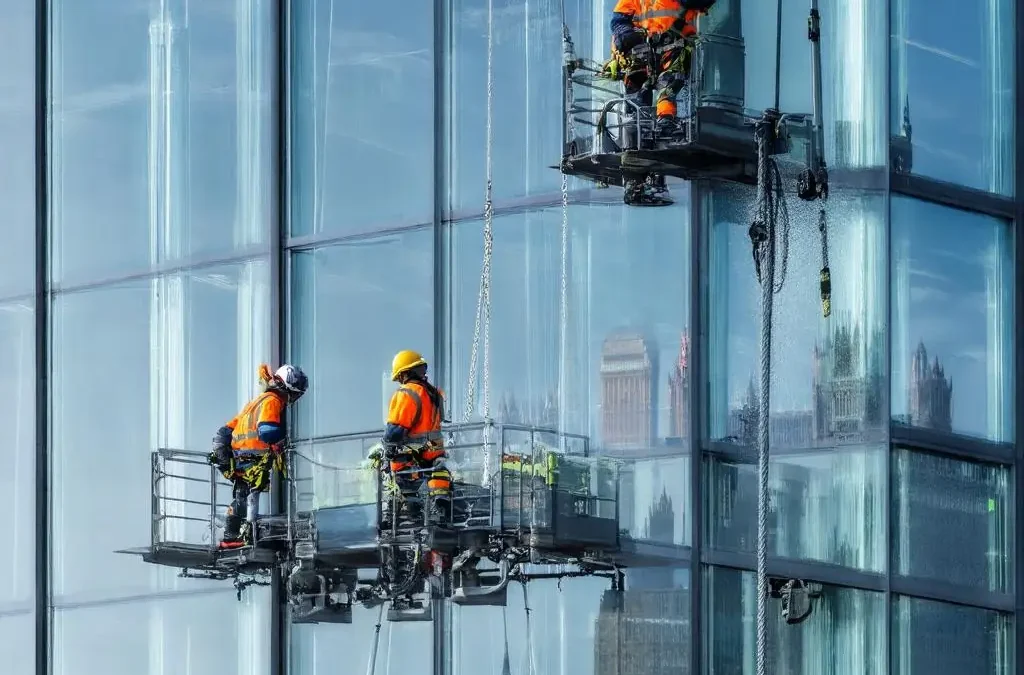
The recent rise in local classifieds has made it easier than ever to find operators offering window cleaning, pressure washing and storefront work. While many of these providers deliver value for homeowners and small premises, selecting a contractor for multi-storey offices, retail estates or mixed-use developments on the basis of a short advert alone is a material risk. Commercial estates introduce complex hazards, public interface, access constraints and stakeholder expectations that require proven systems, specialist training and robust quality management.
This guide provides facilities managers and procurement teams with a practical, compliance-led framework for vetting window cleaning providers serving commercial buildings. It focuses on demonstrable competence, auditable assurance and fit-for-purpose methodologies, so you can safeguard people, property and reputation while ensuring consistent presentation and predictable cost.
Eight essentials for vetting commercial window cleaning providers
1) Verify independent certifications and safety accreditation
Ask for current certificates for recognised management systems:
- ISO 9001 for quality management (evidence of controlled processes, audits and corrective action)
- ISO 14001 for environmental management (identification and control of environmental aspects)
- ISO 45001 for occupational health and safety (risk management, incident investigation and continual improvement)
In addition, require third‑party safety accreditation from a reputable scheme. SafeContractor is widely recognised in the UK and demonstrates verified health and safety processes; equivalents exist, but ensure the accreditation is current and relevant to working at height. Membership of professional bodies such as the British Institute of Cleaning Science (BICSc) and the Federation of Window Cleaners (FWC) also indicates commitment to standards and continuing professional development.
2) Confirm insurance limits and request RAMS
Insist on copies of:
- Employers’ liability insurance (minimum £5 million is a UK legal requirement; many clients stipulate £10 million)
- Public liability insurance with limits appropriate to your site’s risk profile and footfall (often £5–10 million)
Request site‑specific Risk Assessments and Method Statements (RAMS), not generic templates. RAMS should address your building’s access routes, public interface, traffic management, exclusion zones, weather contingencies, emergency procedures, protection of finishes, and communication protocols with your on-site team.
3) Validate competence for working at height
Assess training records and authorisations for all proposed access techniques, including evidence of:
- Water‑fed pole systems: safe use, reach limits, and controls for proximity to electrical hazards
- Rope access/abseiling: qualifications (e.g., IRATA) and a documented rescue plan with named roles
- Mobile elevating work platforms (MEWPs): IPAF operator cards, ground conditions assessments and emergency descent procedures
- Building maintenance cradles: user training, load testing records, LOLER thorough examinations, and procedures for isolations and rescues
Request recent toolbox talk records and supervisor competencies. For multi‑contractor sites, confirm how the provider interfaces with the principal contractor’s Construction Phase Plan or building safety policies.
4) Match access methods to building geometry and glazing
The provider should justify the chosen methods with a clear rationale that considers:
- Height, set‑backs, atria, overhangs and obstructions
- Glazing types (e.g., coated/solar control glass, structural glazing, spandrels) and manufacturer cleaning guidance
- Facade materials adjacent to glass (stone, aluminium, timber, composite panels) requiring protection from abrasion, chemical exposure or water ingress
- Ground conditions, public thoroughfares and traffic routes
- Weather exposure and wind corridors
Expect a method hierarchy that prioritises the safest practicable option (e.g., water‑fed poles for lower elevations, cradles or rope access where fixed systems exist or are justified, and MEWPs where ground access and reach are suitable). Proposals should include access drawings or marked elevations.
5) Check environmental practices
Responsible environmental management both reduces impact and protects your site from enforcement risk. Look for:
- Pure‑water systems that minimise the need for detergents and leave residue‑free finishes
- Chemical minimisation plans, correct dilution controls and COSHH assessments where agents are necessary
- Runoff control measures, including bunding near drains, silt socks, and prevention of contaminated discharge
- Waste handling arrangements, including safe storage and licensed disposal of any residues or packaging
- Evidence of spill kits, staff training and incident reporting procedures
6) Require quality assurance and transparent reporting
Quality should be designed into the service and made visible to you:
- Routine internal audits and supervisor sign‑offs
- Photographic reports (before/after, by elevation) and exception logs
- Agreed KPIs, such as completion by elevation, first‑time pass rates, response times for rectification, and zero‑incident performance
- A defined rectification process with Service Level Agreements (SLAs) for addressing missed panes or quality issues without additional cost
7) Ensure robust personnel management for public‑area work
In high‑footfall environments, contractor behaviour reflects on your brand. Require:
- Clear identification: uniforms, ID badges and branded vehicles
- Site inductions covering your building rules, emergency procedures and stakeholder sensitivities
- Regular toolbox talks and point‑of‑work risk assessments
- Visible supervisor oversight, especially during complex access or when operating near entrances and public routes
- Communication protocols for engaging with reception/security and notifying tenants ahead of works
8) Agree service windows and SLAs to minimise disruption
Define working hours that reflect occupancy and trading patterns—early mornings, evenings or weekends where necessary. Confirm noise, lighting and exclusion measures for out‑of‑hours work, and escalation routes if conditions change (e.g., wind thresholds for height work). Capture response times for unplanned cleans (e.g., post‑construction touch‑ups or facade incidents) and specify the rectification timeline for defects.
Procurement best practice for like‑for‑like comparisons
-
Conduct a joint site survey: Walk the elevations with each bidder. Discuss constraints, anchor points, cradle coverage, MEWP access/egress and ground loading, water supply points, and storage arrangements. Invite alternative methodology options and ask for the risk‑benefit rationale for each.
-
Specify frequencies by elevation and material: For example, monthly for ground‑level retail glazing, quarterly for mid‑rise office elevations, and semi‑annual for high‑level or hard‑to‑access areas. Note sensitive materials or coatings and any manufacturer instructions that must be followed to protect warranties.
-
Standardise scope and inclusions: Define what is in scope (e.g., external glazing, internal atria glass, canopies, balustrades, signage, facade fins) and what is excluded. Clarify whether access equipment hire, traffic management, permits, or water supply are included in the price.
-
Compare like‑for‑like: Request itemised proposals that separate labour, access method costs (cradle time, MEWP hire), mobilisation, and reporting. Ask for sample RAMS, a sample photographic report and KPI dashboard to understand deliverables beyond the day rate.
-
Weight safety and quality alongside price: Adopt a balanced scorecard. A lower headline price can mask higher risk, incomplete coverage, or hidden extras for specialist access. Give meaningful weighting to certifications, RAMS quality, training depth, reporting, and environmental performance.
-
Consider bundling window and facade cleaning: Combining glazing with periodic facade cleaning (e.g., cladding, stone, or canopy maintenance) can reduce duplicated access costs, streamline scheduling, and improve overall presentation. Ensure the provider’s competence spans both activities and that methods and chemicals are appropriate to each surface.
-
Plan governance and reviews: Set quarterly reviews against KPIs, incident statistics and tenant feedback. Build continuous improvement expectations into the contract, including trials of alternative methods where they can improve safety or efficiency.
Red flags common in small ads
Be cautious when you encounter:
- No insurance detail or unwillingness to share certificates
- Vague claims about height capability without documented training or rescue plans
- “Cash‑only” payment terms or pressure for immediate decisions
- No references, no case studies, or an inability to provide site‑specific RAMS
- “Up to three storeys only” when your site requires more, or a proposal that does not acknowledge your building’s actual access constraints
- Generic, one‑page quotes with no mention of method, frequency, reporting or SLAs
- Over‑reliance on ladders where safer alternatives exist
Any one of these may indicate a domestic‑scale operator rather than a commercial specialist, or a provider without the systems needed to protect people and property at scale.
The payoff: safer operations, better presentation, predictable cost
A rigorous, compliance‑led selection process takes a little more time up front, but it pays dividends across the contract term. You will benefit from:
- Safer operations: trained personnel, tested access systems and clear rescue procedures
- Better presentation: consistent standards verified by photographs, audits and KPIs
- Predictable cost: planned frequencies, minimal disruption, reduced rework, and fewer surprises from access hire or remedial interventions
- Lower risk: robust insurance, auditable RAMS and independent accreditation backing every visit
In a market crowded with generalists, a methodical vetting approach helps you identify true commercial specialists—providers that can evidence certified management systems, proven competence at height, responsible environmental practices and disciplined quality control. That is how you move from the uncertainty of classifieds to the assurance of compliance, securing a safer, more reliable window cleaning service for your commercial estate.
Recent Comments