
A viral tip recommends mixing high‑proof alcohol with water, a small amount of starch, and optional vinegar to achieve streak‑free glass. The chemistry is sound in principle:
- Alcohol (ethanol or isopropanol) dissolves oily residues and evaporates quickly, reducing the window of time in which surfactants can leave smears.
- Starch can bind microscopic residues and help limit streaking by preventing redeposition.
- Vinegar (acetic acid) can help dissolve mineral deposits left by hard water.
However, what works for a domestic bathroom mirror does not automatically translate to offices, retail units or high‑rise façades. Commercial buildings present different risk profiles, surface specifications and operational demands. Facilities managers must weigh chemical compatibility, occupant sensitivities, compliance responsibilities and the sheer scale of modern glazing.
In offices and retail environments, small interior panes may tolerate occasional alcohol-based wipe-downs, provided the glass is uncoated and the area is well ventilated. Yet many commercial buildings incorporate window films, low‑E or solar control coatings, frits, tints, specialist seals and adjacent finishes that may not be compatible with repeated exposure to alcohols or acids. High‑rise exteriors introduce further constraints: access, weather, safe working at height and consistency across large areas. Here, purpose-designed methods are normally safer, faster and more cost‑effective.
Risks, compliance and compatibility: what facilities managers must control
Before introducing any DIY chemical, consider the following under UK requirements:
- Flammability and storage: High‑proof alcohols are highly flammable (flash points commonly around 12–13°C). Under COSHH and DSEAR, you must assess risks, store in approved flammable cabinets away from ignition sources, limit decanting volumes, and implement spill response. Do not mix, decant or use near hot works, live electrics, or during operations with potential sparks.
- Labelling and SDS: Any decanted solution must be correctly labelled in line with CLP and supported by up‑to‑date safety data sheets (SDS) for each constituent. Unlabelled trigger bottles are a compliance and safety breach.
- Workplace exposure and odour: Alcohol vapours can irritate some occupants and may exacerbate indoor air sensitivities. Refer to HSE EH40 for workplace exposure limits (for example, propan‑2‑ol has an 8‑hour TWA and a STEL). Ensure adequate ventilation and schedule work to minimise disruption.
- Compatibility with glazing systems:
- Window films and coated or tinted glass may be sensitive to solvents and acids; check manufacturer maintenance guides. Alcohols can attack certain adhesives over time, and vinegar can dull or stain some coatings.
- Seals and finishes: Repeated solvent exposure may leach plasticisers from some gaskets and soften sealants; acids can etch natural stone sills, corrode some metals if protective coatings are compromised, and mark timber finishes.
- Starch residues: Incomplete buffing can leave a faint haze and, in damp conditions, may support microbial growth on infrequently cleaned interior panes.
Documentation and training matter. If in-house teams are to use any chemical cleaner—even a “DIY” mix—provide COSHH assessments, method statements, PPE guidance (eye protection and gloves at minimum), ventilation protocols and first‑aid measures. Ensure supervisors understand when to stop work (odour complaints, fume build-up, incompatible surfaces, or ignition risks).
Cost-in-use, scale and the realities of commercial glass
A DIY formula can feel inexpensive at a spray-bottle scale. At commercial scale, hidden costs and risks rise:
- Product cost versus professional concentrates: High‑proof alcohol is relatively costly per litre, especially at the purities used for fast evaporation. Commercial window-cleaning concentrates are optimised for dilution, stability and wetting, delivering predictable results at a lower cost per square metre. Pure‑water systems remove detergent spend altogether for exterior glass.
- Labour efficiency: Large panes and high‑visibility atria demand professional technique (controlled application, blade angle, edge detailing). Even with a “fast‑evaporating” solution, untrained operators spend longer correcting edges and detailing frames—time that quickly outweighs any perceived chemical saving.
- Consistency and frequency: Corporate image depends on streak‑free, repeatable outcomes. Frequency-based schedules (for example, weekly interiors, monthly or quarterly exteriors depending on location) depend on reliable methods that scale, not on ad‑hoc mixes whose performance varies with dilution, local water chemistry and operator skill.
- Liability and rework: Incompatible chemistry can cause ghosting on films, dulling of coated glass, or damage to adjacent finishes—issues that trigger costly remediation and potential warranty disputes.
For high‑rise façades and expansive retail frontages, purpose-built systems routinely deliver better cost-in-use by reducing rework, minimising remediation risk and accelerating cycle times.
Safer, scalable alternatives and an autumn-ready approach
To achieve residue‑free results at scale—particularly through autumn—consider the following:
- Exterior glass: Pure‑water (deionised) reach‑and‑wash systems lift dirt without detergents, drying spot‑free when used correctly. They are ideal for high panes and cladding and remove the risk of chemical residues that attract soil.
- Interior glass: Professional squeegee methods with neutral, low‑residue detergents or approved proprietary glass cleaners, paired with high‑quality microfibre for detailing. Colour‑coded microfibre prevents cross‑contamination, and a disciplined two‑cloth method (damp apply, dry buff) controls streaking without strong odours.
- Hard‑water spotting: Where mineral deposits persist, use targeted, manufacturer‑approved descalers. Avoid acids near sensitive stones, metals and frames; mask or protect vulnerable adjacent materials and rinse thoroughly.
- Scratch‑avoidance protocol:
- Dry dust and grit first with a vacuum and soft brush; never rub dry grit across glass.
- Use scrapers only on uncoated glass and only with new, clean blades at the correct angle; pre‑test inconspicuous areas.
- Maintain clean channels, rubbers and sleeves; replace at set intervals to avoid edge trails.
- Autumn priorities and scheduling:
- Increased pollen, dust and leaf debris after summer can migrate onto glazing; clogged gutters and ledges create splashback that marks façades.
- Larger day–night temperature swings foster condensation on interiors, highlighting smears and encouraging mould on frames.
- Low sun angles reveal streaks; schedule interior detailing ahead of seasonal occupancy peaks.
- Set an autumn schedule that pairs façade and window cleans with gutter, canopy and signage cleaning. In busy retail fronts, consider higher-frequency touch‑ups on door glass and hand‑height panels.
Safe access at height remains non‑negotiable. For multi‑storey properties, use the right method for the geometry and risk profile:
- Water‑fed poles for efficient work up to several storeys without ladders.
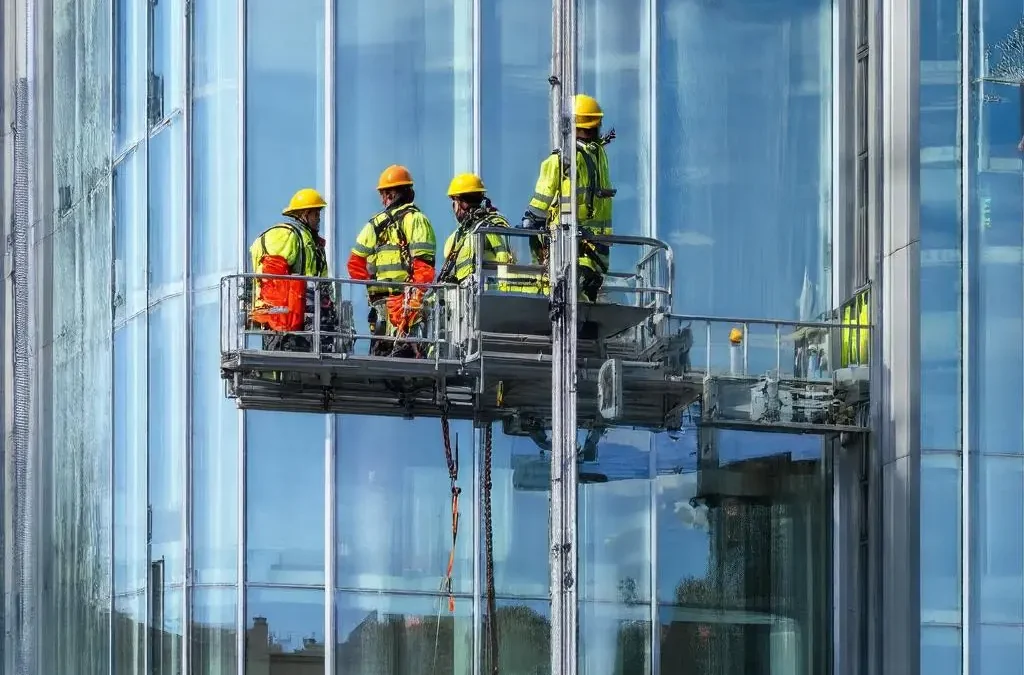
- Cradles and building maintenance units for consistent access on high façades.
- Rope access (abseiling) by qualified technicians for complex elevations.
- Mobile elevating work platforms where appropriate, with trained and certified operators.
Under the Work at Height Regulations 2005, untrained staff should not attempt exterior or height work. Professional teams bring permits to work, weather monitoring, rescue plans, exclusion zones and the competencies to keep the public and occupants safe.
A practical decision framework—and when to call professionals
When a limited trial of an alcohol-based cleaner might be acceptable:
- Scope: Small, low‑risk interior areas only; no window films, tints, frits or special coatings; no adjacent sensitive stones or exposed metals; away from ignition sources.
- Controls: Completed COSHH assessment; correct CLP labelling on any decanted bottles; SDS on site; trained operatives; local exhaust ventilation or adequate natural ventilation; limited volumes mixed fresh; secure flammable storage; documented spill response.
- Testing: Patch test on a discreet area; monitor for haze, softening of seals or odour complaints; discontinue at first sign of incompatibility.
- Alternatives on standby: If streaking persists or sensitivities arise, revert to professional products with known compatibility.
When to engage accredited professionals for consistent, compliant results:
- Any exterior or at‑height work, including retail frontages above ground level or high‑rise façades.
- Large interior areas where speed, consistency and low odour are essential for occupant comfort and brand standards.
- Buildings with window films, coated, low‑E or tinted glass, heritage assets or sensitive adjacent materials where warranties and finishes must be protected.
- Sites requiring formal RAMS, documented quality control, and environmental and safety management aligned to ISO standards.
Efficient Cleaning Services is a seasoned provider of commercial window and façade cleaning across London and the South East. With two decades of experience and specialist access capabilities—including water‑fed poles, cradles, rope access (abseiling), ladders for low‑risk tasks and mobile platforms—our teams deliver compliant, streak‑free results year‑round. Our ISO 9001, 14001 and 45001 certifications underpin rigorous quality, environmental and occupational health and safety management, while SafeContractor approval and affiliation with BICSc and the Federation of Window Cleaners reflect our commitment to safe, reliable service. Led by directors with multi‑sector experience, we invest in recruitment, training and clear communication so that every site benefits from tailored, proactive solutions that protect both the public and our employees.
If you are considering autumn cleaning plans—or weighing the practicality of DIY alcohol-based options—speak to us for a free, no‑obligation quote via our website. We will assess your glazing types, access needs and brand standards, then propose a safe, cost‑effective schedule that keeps your glass and façades pristine without compromise.
Recent Comments